
What’s the Updated Eviction Process with SB38?
Recent changes to Texas law have brought important updates to the eviction process following the passage of Senate Bill 38 (SB38). This bill will go into effect starting Jan. 1, 2026.
At Pros PM, we believe clarity and transparency are critical for both property owners and residents, especially when legal processes are involved. Here’s what you need to know about the updated process and what it means for Texas property owners and residents.
What Is SB38?
SB38 introduced changes intended to modernize and clarify parts of the Texas eviction process. While the eviction process itself is still governed by state statutes and the Texas Supreme Court’s Rules of Civil Procedure, SB 38 affects how notices are delivered, how timelines are handled, and how both parties stay informed.
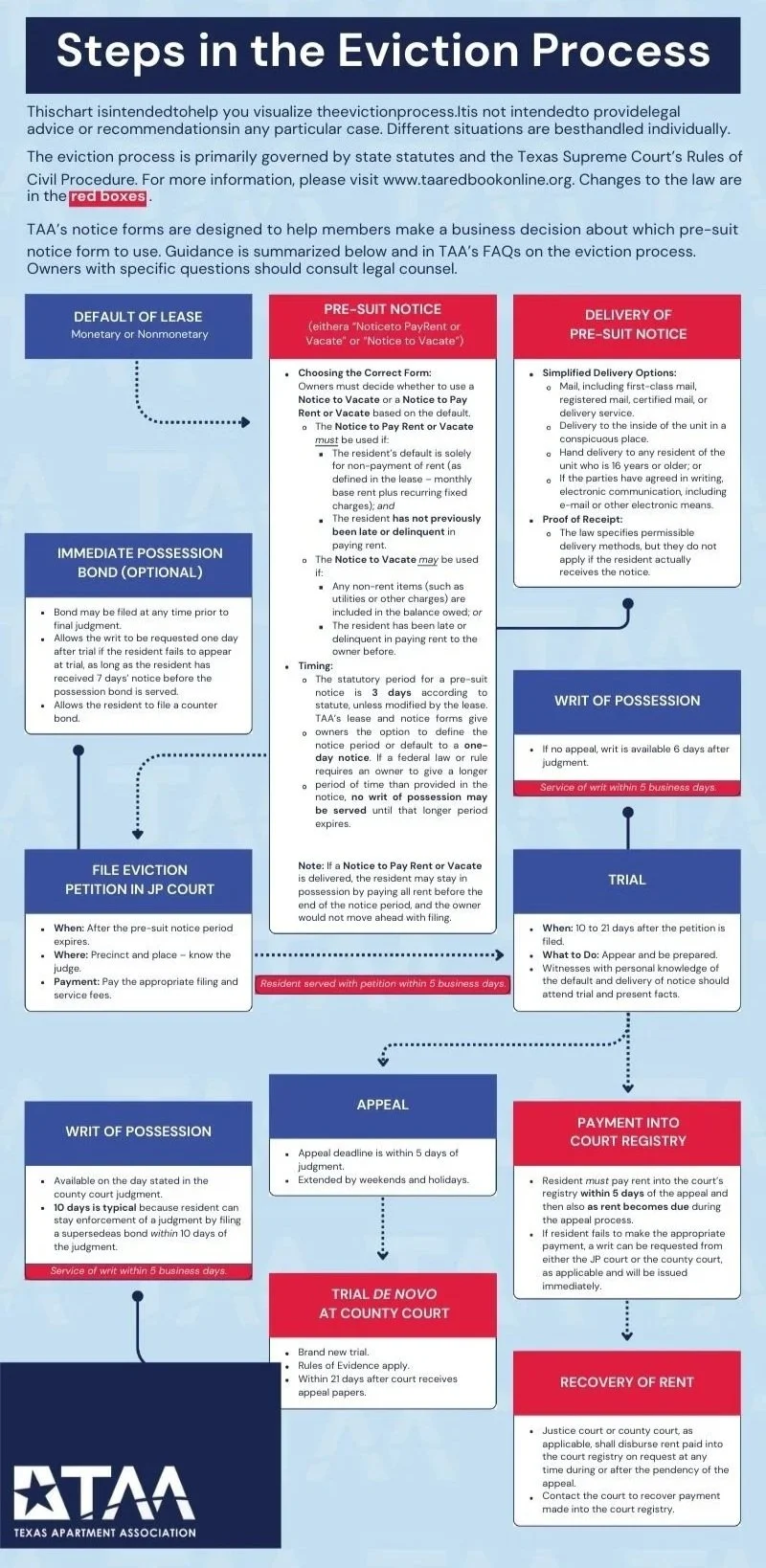
TAA’s Updated Eviction Process Chart
Texas Apartment Association (TAA) created a clear, step-by-step visualization of the eviction process, including changes highlighted in red to reflect updates. The TAA chart is intended as a visual guide, not legal advice
What Does SB38 Mean for Owners?
More Flexible (and Modern) Notice Delivery
SB38 clarifies the acceptable methods for delivering eviction-related notices. In addition to traditional delivery methods, electronic notice, like email, may now be used if the owner and resident agreed to it in writing.
Clear Guidance on Choosing the Correct Notice
The law distinguishes when to use:
Notice to Pay Rent or Vacate
Notice to Vacate
For example, a Notice to Pay Rent or Vacate must be used when the default is solely non-payment of rent, and the resident has not previously been delinquent. If other charges are involved, or there’s a history of late payment, a Notice to Vacate may be appropriate.
Clarified Timelines
The updated chart reinforces:
The standard three-day pre-suit notice period, unless modified by the lease
The ability for leases to define alternative notice periods
The requirement to follow longer notice timelines if federal law applies
It also outlines timelines for filing, trial scheduling, appeals, and writs of possession in a clear, visual format.
What SB38 Means for Renters
Clearer Communication
SB38 emphasizes proper delivery and receipt of notices. With this change, renters are less likely to miss important notices and more likely to understand where they stand in the process.
Opportunity to Cure Non-Payment
When a Notice to Pay Rent or Vacate is used, renters may remain in possession by paying all rent owed before the notice period expires. This allows renters the ability to resolve issues early and avoid escalation when non-payment is the only issue.
Clear Expectations During Appeals
If a renter appeals an eviction judgment, SB38 clarifies that:
Rent must continue to be paid into the court registry
Missing required payments can result in immediate loss of possession
How Pros PM Navigates These Changes
At Pros PM, we closely monitor legislative updates and industry guidance to ensure our processes reflect current law. We use clear communication, proper documentation, and systems like Property Meld to help prevent maintenance-related issues, which are one of the most common causes of turnover and disputes.
While every situation is different and legal counsel should always be consulted for specific cases, our role is to help everyone navigate property management responsibly, professionally, and with confidence.